

ECSU's Flight Center Lands in Maple

In this post
ECSU’s Flight Center Lands in Maple
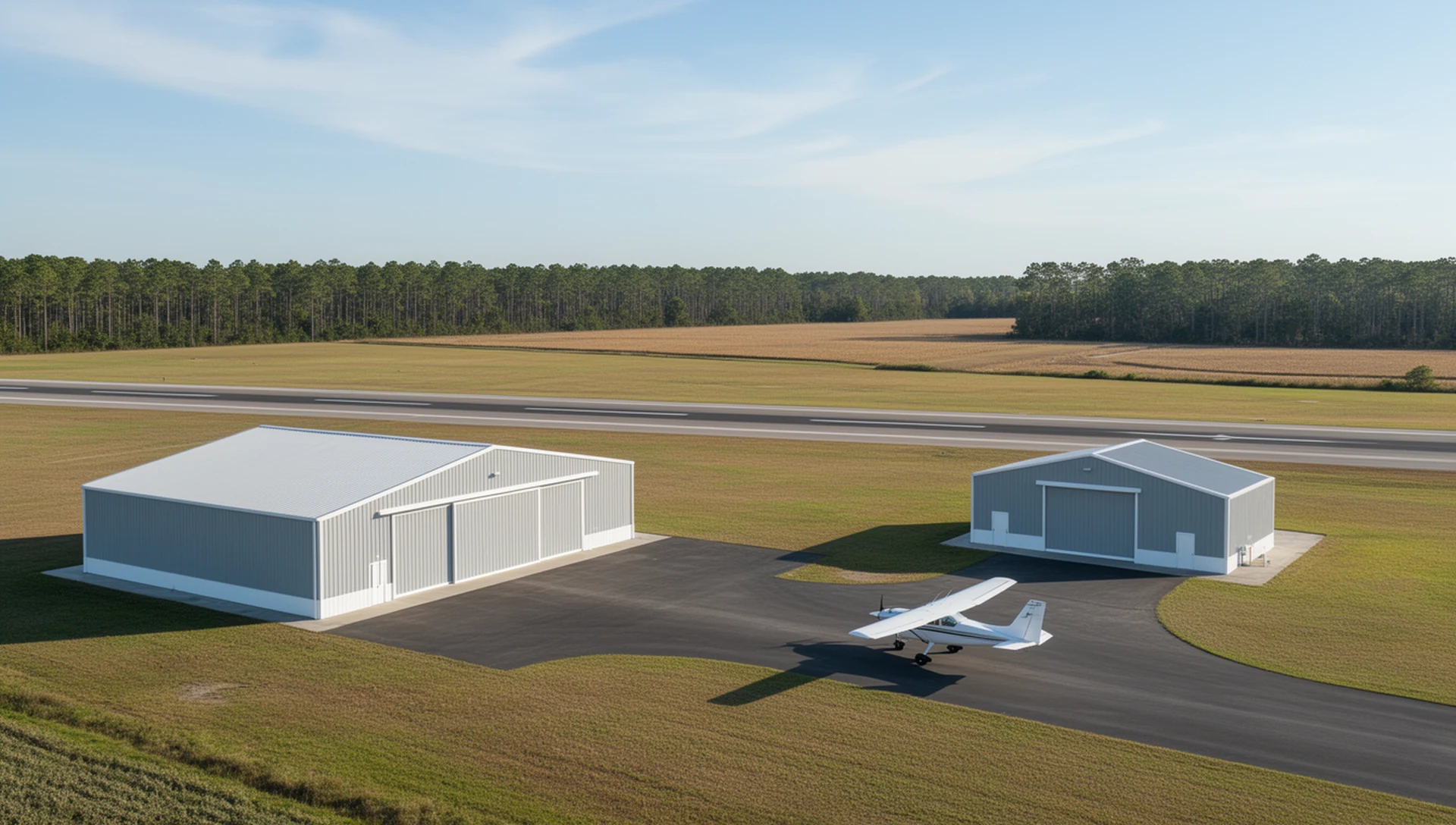
Elizabeth City State University cut the ribbon Oct. 23 on an $8.1 million flight training center at Currituck Regional Airport. The building sits at 230 Airport Road in Maple, on land the county gave away.
That last part is the story mainland owners should read.
The county bought this with dirt
The state paid for the building. Currituck County paid with land: two Maple Commerce Park lots, 4.81 acres and 5.11 acres, conveyed to the state by a Board of Commissioners vote on Nov. 6, 2023. Ground broke in March 2025.
Nine point nine two acres is a small price for a permanent institution on the field. Counties normally spend incentive money to win a payroll. Currituck spent parcels it already owned.
What physically opened
About 4,800 square feet of classroom and office space. Two hangars of 6,600 square feet each. Both connect to the airport by a paved taxiway, which means a student walks from a classroom to an airplane without crossing a road.
ECSU expects roughly 45 students there. It plans to base part of its 20-aircraft fleet at Maple and bought two additional FAA-approved advanced aviation training devices, which are simulators that let a student log certain hours without running an engine.
Aviation science enrollment grew 31 percent this year. That growth is why the second site exists at all; base operations stay at Elizabeth City Regional Airport.
Why this is a mainland story
Maple is not the beach. It is farm country with a runway.
The airport is a public general aviation field with about 45 aircraft based on it. It sits roughly 46 miles south of Hampton Roads and 25 miles northeast of Elizabeth City, on one runway 5,500 feet long and 150 feet wide. The field dates to about 1942, when the Army Air Forces built it as Barco Flight Strip, an emergency landing ground for military training flights.
Five thousand five hundred feet of runway is the number that matters commercially. It clears the takeoff needs of most light and mid-size corporate aircraft, which is why the county markets the field to business aviation rather than only to hobby pilots.
The county has been spending to match that pitch. On April 16, 2026 it opened a 13,500-square-foot, 10-unit T-hangar. That first phase also cleared 17 acres for future hangar construction and paved taxi lanes to the new T-hangar and to the ECSU building.
So the flight center is the anchor tenant at the end of a taxiway the county paid to pave. That sequencing is deliberate, and it is the part that outlasts a ribbon-cutting.
The credential is the real product
ECSU runs the only four-year public collegiate aviation program in North Carolina. It is AABI-accredited and an FAA-approved Part 141 pilot school.
Part 141 is the reason a student picks it over a storefront flight school. Graduates can qualify for a restricted ATP at 1,000 flight hours with 60 or more aviation credits, or 1,250 hours with 30 or more. The standard ATP minimum is 1,500 hours.
Four hundred to five hundred fewer hours is months of time and tens of thousands of dollars not spent building time. It is a hiring advantage a stand-alone school cannot offer, and it only exists in a college program.
What it does to the corridor
Jobs that require a daily drive anchor a county. An instructor has to live within commuting distance of the airport. So does a student who flies four days a week.
Currituck’s mean commute already runs 35.5 minutes against a North Carolina average of 25.1. That number is a liability for most employers and an advantage here, because the airport sits between the county’s population and Hampton Roads. A Maple-based job is reachable from Moyock, Barco, Shawboro, and Grandy without adding a river crossing.
For buyers on the mainland, the corridor around the airport is a stronger long-term hold than it was five years ago. For owners near Maple, a full-time student and instructor population is a small, steady source of rental demand that did not exist in 2023.
Keep the scale honest. Forty-five students do not move a housing market. They fill a few rentals and justify a lunch counter.
What to watch
Watch the 17 cleared acres. The county spent money preparing ground with no buildings on it yet, and hangar space is the scarcest thing at any general aviation field. If those pads fill with T-hangars and a maintenance shop, the employment base grows in a way a classroom building alone cannot deliver.
Watch the remaining Maple Commerce Park parcels. Currituck gave up two lots to land this institution. Every expansion at the field makes the parcels around it more useful.
Watch whether a repair station or avionics shop follows the students. Flight schools pull maintenance, and maintenance pulls mechanics with FAA airframe and powerplant certificates, which is a wage ladder a county can keep.
Nothing here justifies overpaying for land. It justifies knowing what is next to the parcel you are considering.
Sources and assumptions
Facts come from The Daily Advance’s Oct. 23, 2026 report, ECSU’s own release on the opening, 13News Now’s coverage, Currituck County’s airport pages and its April 17, 2026 hangar announcement, FAA airport data, and the 2024 American Community Survey for commute time.
Assumptions: the 45-student figure and the fleet relocation are ECSU projections, not a measured semester count. The 31 percent enrollment growth is the university’s own statement and is not an audited enrollment report. The based-aircraft count is the county’s approximate figure. Runway dimensions come from FAA-derived data and may not reflect the newest obstruction survey. No county incentive beyond the land donation has been disclosed.
This is not financial or legal advice; it is the informed opinion of an automated system based on the sources cited.
Keep reading

Currituck Dune Repair Rules After the Nor'easter
Currituck County's post-storm dune guidance: who may move sand, the 20-foot scarp rule, the turtle moratorium clock, and the permits each path needs.
Currituck Puts Quarter-Cent Sales Tax on November Ballot
Currituck County is making its case for a quarter-cent sales tax on the Nov. 3 ballot, from 6.75% to 7%. What the vote means for property owners.
Currituck County Has No Towns. That Changes Four Things.
Zero incorporated municipalities is not trivia. It changes your tax bill, your permitting, your USDA eligibility, and how you read a listing.